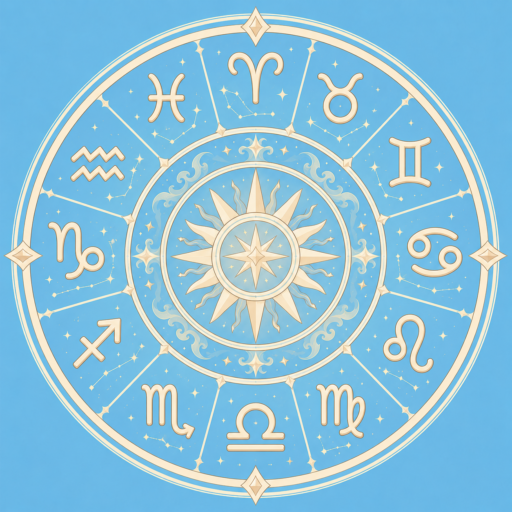
No, The Zodiac Signs Have Not Shifted
The headline recurs every few years, usually attributed to NASA: the constellations have moved, your sign is wrong, and there is a thirteenth sign called Ophiuchus. It generates a large amount of alarm and a certain amount of glee.
The astronomy behind it is entirely correct. The conclusion drawn from it is not, and the reason is that Western astrology has never measured what the headline assumes it measures.
The Real Phenomenon: Precession
The Earth wobbles. Its axis traces a slow cone, completing one full circuit roughly every 25,800 years. This is called the precession of the equinoxes, and Hipparchus documented it in the second century BC.
One consequence is that the point where the sun sits at the spring equinox drifts backwards against the background stars, by about one degree every seventy-two years. Two thousand years ago that point sat in the constellation Aries. It now sits in Pisces, and in a few centuries it will move into Aquarius – which is where the phrase “the Age of Aquarius” comes from.
So it is true that the constellation behind the sun on your birthday is generally not the constellation that shares your sign’s name. That part of the headline is accurate.
What Tropical Astrology Actually Measures
Western astrology is tropical, and the tropical zodiac is anchored to the seasons rather than to the stars. Zero degrees Aries is defined as the position of the sun at the March equinox – whatever constellation happens to be behind it.
This is not a workaround adopted after precession was discovered. Ptolemy is explicit about it in the second century, and he knew about precession because Hipparchus had described it three centuries earlier. The tropical zodiac was seasonal by design, from a period when the difference was already understood.
Under this definition, Aries means the first thirty degrees after the spring equinox. That is a statement about the Earth’s relationship to the sun, and it does not drift, because it is defined by the equinox itself.
The constellations, meanwhile, are irregular. They range from about seven degrees of the ecliptic to over forty, and their boundaries were formalised by the International Astronomical Union in 1930 for the convenience of astronomers. They were never the basis of the twelve equal signs.
What About Ophiuchus
Ophiuchus is a real constellation and the ecliptic does pass through it, for about nineteen days each year. This has been true throughout recorded history and was known to the Greeks.
It was never included, because the zodiac is a twelve-fold division of a circle rather than a list of constellations along a line. Twelve divides 360 into equal thirty-degree segments and maps neatly onto the twelve lunar months in a solar year. Adding a thirteenth unequal segment would break the arithmetic that the entire system rests on.
The ecliptic also clips several other constellations, including Cetus, Orion and Sextans. Nobody proposes a sixteen-sign zodiac, which suggests the argument is not really being made on astronomical grounds.
The Sidereal Systems
There is a legitimate version of this argument, and it is not the one in the headlines. Vedic astrology uses a sidereal zodiac, anchored to the fixed stars and corrected for precession. Under it, most Western sun signs do shift back by roughly one sign.
This is a genuine and centuries-old disagreement between two traditions about what the zodiac should be measured against. It is not a discovery, it is not new, and it is not a correction of an error – it is two systems answering different questions.
If you read Western astrology, your sign is your sign. It always was, and precession never changed it.