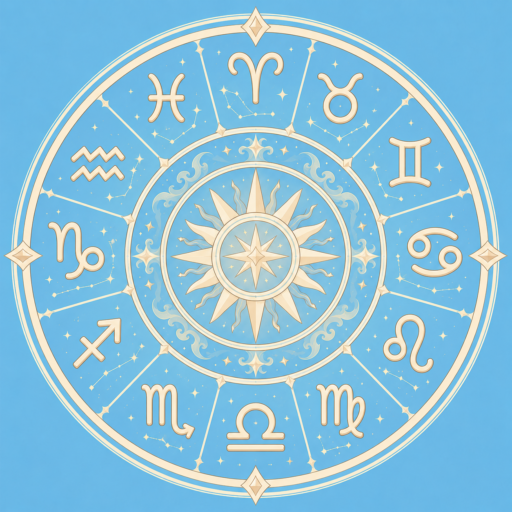
Astrology Guide
The building blocks behind every horoscope — elements, modalities, planets and houses, explained plainly.
Start With Your Sign
Every sign combines an element, a modality and a ruling planet. Yours is a good place to begin.
What Astrology Is Actually Doing
Astrology takes the positions of the sun, moon and planets at a given moment and reads them as a set of themes - drive, affection, discipline, restlessness - rather than as a set of instructions. It is a symbolic language, and the chart does not decide anything.
That distinction is the whole basis of this section. A birth chart is not a forecast, and no arrangement of planets causes anything to happen in a life. What a chart supplies is a vocabulary for patterns a person may already half-recognise in themselves, and a structure for thinking about how those patterns interact.
The structure has three layers. Twelve signs describing temperament, ten planets describing function, and twelve houses describing the areas of life where those functions play out. Read together they produce a portrait detailed enough to be interesting and specific enough to be wrong - which is the property that makes it worth reading at all.
Read These In Order
The encyclopedia works best in sequence, because each layer depends on the one before it. Elements first: four temperaments, and the fastest way to get a feel for any sign.
Then modalities, which cut across the elements and describe timing rather than temperament - who starts things, who sustains them, who adapts. Element and modality together account for most of what the twelve individual sign descriptions say, and working a sign out from those two is more useful than memorising it.
Then planets, which describe function rather than style. Then houses, which describe where a function is spent - and which are the layer that turns a general description into one about a particular life.
What It Cannot Do
The scientific position is settled and worth stating plainly rather than burying: controlled studies have found no effect, and there is no proposed mechanism by which planetary positions could influence personality. The gravitational pull of Mars on a newborn is smaller than that of the building.
The astronomy underneath the calculators on this site is nonetheless real and carefully checked - the positions are genuinely correct, and that is a claim we defend. What those positions are taken to mean is tradition and interpretation. Keeping the two visibly apart is the editorial position of the whole site.
Used as prompts, this material is clarifying. Used as a forecast, or as grounds for a decision about health, money or a relationship, it is being asked to carry far more than it can. For those decisions, talk to somebody qualified.