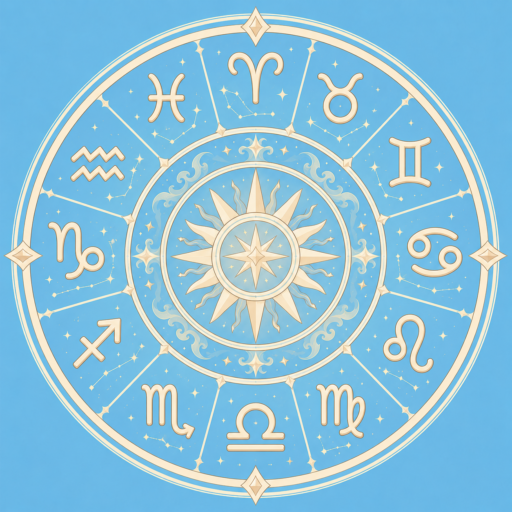
The Four Elements
Fire, earth, air and water — the temperament underneath every sign.
Why The Elements Come First
Four categories, three signs each, and they explain more about how a sign behaves than the individual descriptions do. If you learn one thing about astrology, this is the thing with the best return.
Fire initiates - it engages before it assesses. Earth verifies - it tests an idea against the physical world before spending anything on it. Air abstracts - it represents a situation in language before responding to it. Water registers atmosphere - it reads the emotional weather of a room before the content.
None of these describes a mood or a personality type. Each describes a default: the direction a person moves in before they have decided to.
The Element Is Not The Whole Sign
Three signs share each element and they are not interchangeable, because the modality differs. Aries, Leo and Sagittarius are all fire, and they are cardinal, fixed and mutable fire respectively - the fire that starts, the fire that sustains, and the fire that spreads.
That is why reading element alongside modality is the efficient route. Two small tables and a rule for combining them replaces twelve memorised descriptions, and produces reasoning rather than recall.
Elements In Relationships
The elements describe compatibility more honestly than sign-by-sign lists, and with far less machinery. Fire and air accelerate each other. Earth and water steady each other. The cross-pairings require more deliberate effort.
Crucially, that is not a verdict. Element compatibility describes translation cost - where two people will have to work to understand each other - rather than the quality of a relationship. The pairings described as difficult frequently produce the most durable ones, because neither person can coast on assuming the other works the same way.
Your Own Balance
A sun sign gives you one element, which is a single data point. Counting several placements gives a picture of which element a chart actually leans on and which it barely carries.
The missing element is usually the more informative half. It is not a deficiency - it is the thing that has to be done consciously because it does not arrive on its own, and it frequently shows up as visible effort rather than as visible incapacity.