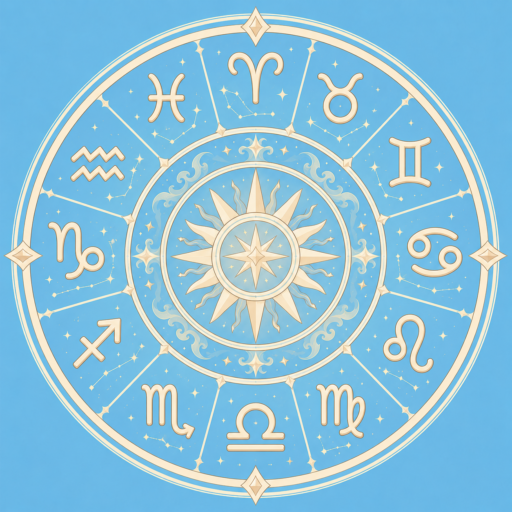
Why Your Horoscope Feels Accurate Even When It Is Not

In 1948 a psychologist named Bertram Forer handed his students what he told them were personalised personality analyses based on a test they had taken. He asked them to rate the accuracy out of five. The average came back at 4.26. Every student had received exactly the same text, assembled by Forer from a newsstand astrology column.
The passage included lines like “you have a great deal of unused capacity which you have not turned to your advantage” and “at times you are extroverted, affable and sociable, while at other times you are introverted, wary and reserved.” Nearly everyone recognised themselves, because nearly everyone is describable that way.
This is the Barnum effect, and it is the single most important thing to understand about reading horoscopes. It is not an argument that astrology is worthless. It is an argument about which parts of it are doing work and which parts are doing something else.
What Makes A Statement Barnum-Proof
A Barnum statement has three properties. It is broadly flattering, or at least not unflattering. It describes a trait and its opposite, so any reader lands somewhere inside it. And it is unfalsifiable – there is no observation that would make it clearly wrong.
Test any horoscope line against those three. “You value honesty in your relationships” fails all three tests instantly: it is flattering, universal, and unfalsifiable. Nobody reads that and thinks it is not about them.
Now test a sharper claim. “Under pressure you go quiet and handle it alone, and the people close to you find that harder than the problem itself.” That one is falsifiable. Plenty of people do the opposite – they call somebody immediately. If it fits, it fits for a reason, and if it does not, you notice.
The useful test is whether a description could have been written about somebody else and clearly be wrong. If not, it is not telling you anything.
Where This Leaves Sun Sign Columns
A daily column addressed to a twelfth of the world has no choice but to be Barnum. There is no statement about several hundred million people that is both specific and true, so the writing goes vague by structural necessity rather than by dishonesty.
This is why the same column can feel eerily apt on a day when something is going on in your life and completely blank on a day when nothing is. The text did not change. You brought the specificity, matched the vague statement to whatever was already occupying you, and experienced the match as recognition.
Notice the tell: horoscopes feel most accurate when you read them looking for something. That is the effect working, not the astrology.
The Part That Is Not Barnum
A birth chart is a different object from a sun sign column, and the difference is arithmetic. Twelve sun signs divide the population into twelve groups. Add a moon sign calculator and you have 144 combinations. Add a rising sign calculator and you have 1,728. Keep going through the planets and houses and the resolution gets fine enough that a description can be genuinely specific, and therefore genuinely capable of being wrong.
That does not make the interpretations true. It makes them testable in a way a sun sign column never is, and it means a chart reading that misses can actually miss rather than sliding around until it fits.
This is the honest case for charts over columns: not that the symbolism is more valid, but that the statements are specific enough to be checked against a real life. If a chart description of you is wrong, you will know, and that is a property worth having.
How To Read Anything On This Site
Notice your reaction rather than the text. A description that irritates you has usually touched something real; that discomfort is information. A description that feels pleasant and vaguely true is probably Barnum, and it is telling you nothing you did not already assume about yourself.
Then look for what is missing. A good description of a temperament includes its costs. Any account of a sign that is entirely complimentary has stopped describing people and started selling flattery to a demographic, and there are twelve demographics being flattered in rotation.
We write the sign profiles here to include the parts nobody wants to read about themselves, which is why they occasionally land badly. That is the intended behaviour rather than a failure of tone.